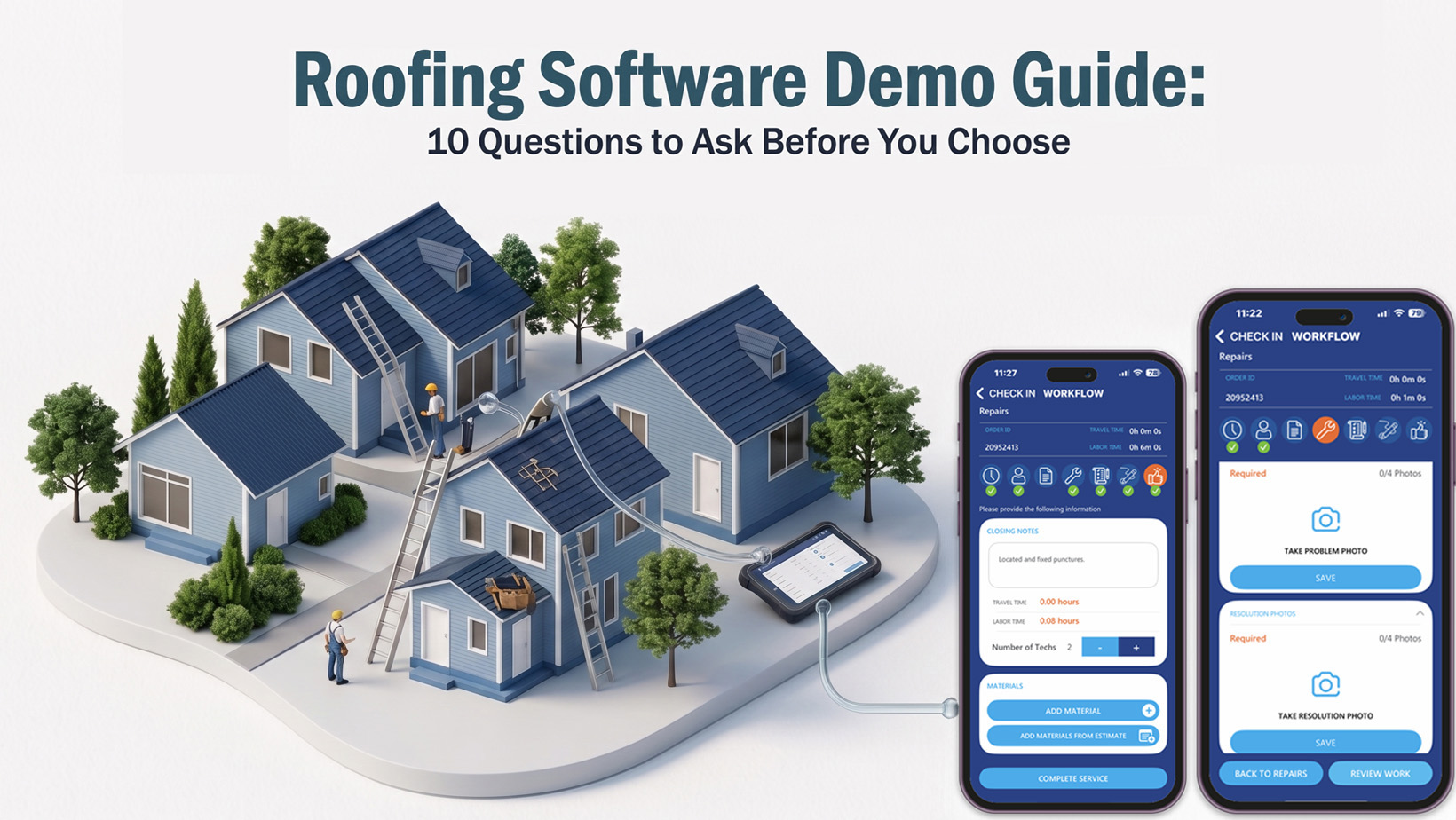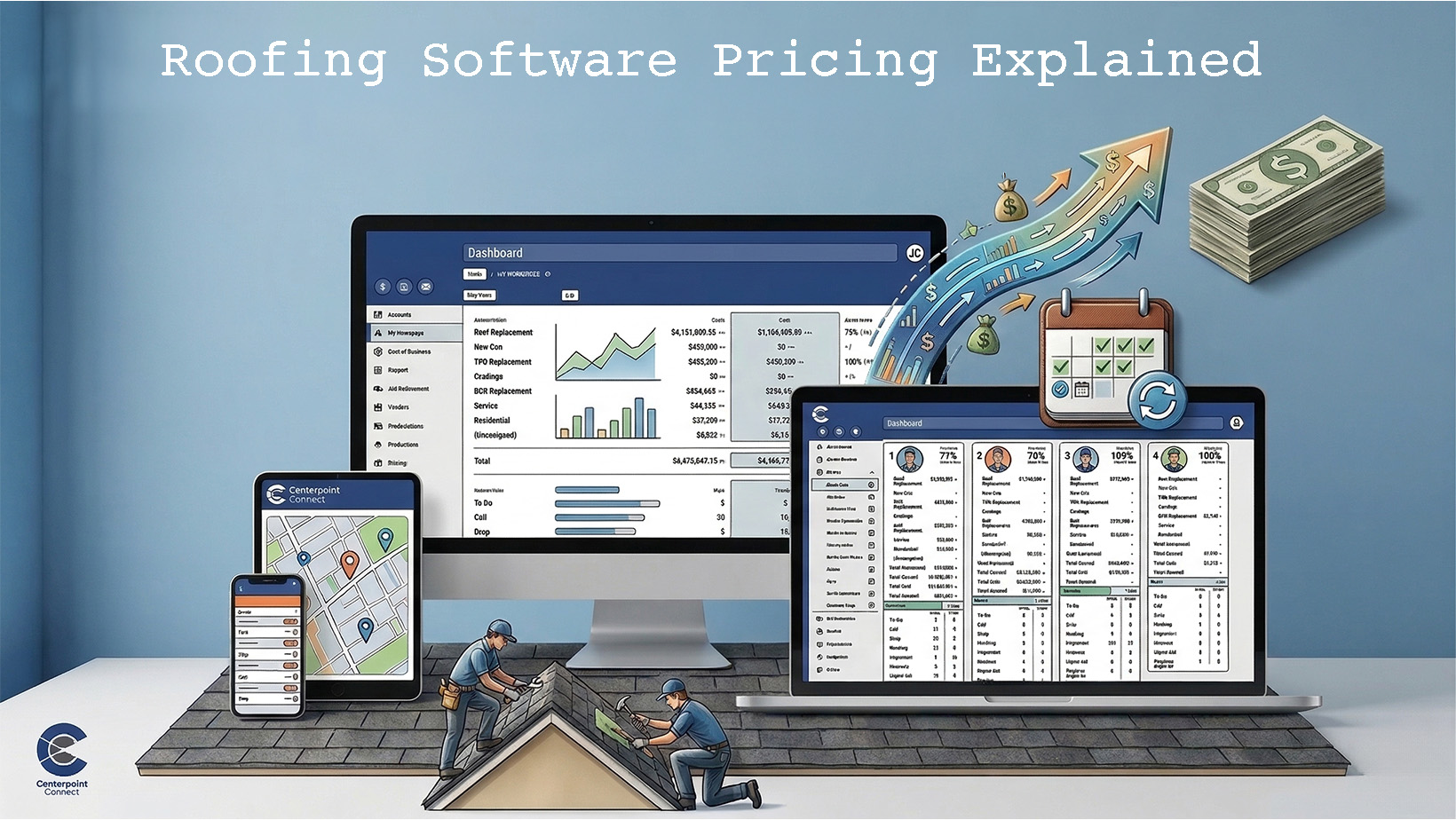
A roofing software demo is more than a product walkthrough. It’s your chance to see how the system will actually fit into your day-to-day operations. Many contractors leave demos impressed by features, but unsure how the software will work once real jobs, real crews, and real deadlines are involved. Asking the right questions during the demo helps you move past surface-level functionality and evaluate long-term value.
This guide outlines ten essential questions to ask when reviewing roofing software or commercial roofing software, so you can make a confident, informed decision.
1. How does the software support our full workflow, not just sales?
Some platforms focus heavily on lead tracking but lose value once a job moves into production. During the demo, ask how the system connects sales, estimating, service, production, and invoicing.
You want to see how information flows from one stage to the next without being re-entered or lost.
2. Can field and office teams work in the same system?
Roofing operations depend on coordination between the field and the office. Ask how crews, project managers, and office staff use the software together.
Look for real-time updates, shared access to photos and notes, and mobile-friendly tools that keep everyone aligned without extra steps.
3. How does this handle commercial roofing complexity?
Commercial roofing brings added layers like phased work, larger scopes, multiple stakeholders, and detailed documentation. Ask the demo team to show how the software manages complex scopes of work, approvals, and ongoing project tracking for commercial jobs, not just simple installs.
4. What does estimating look like in real scenarios?
Estimating is where accuracy and speed directly impact profitability. Ask to see how estimates are created, updated, and approved.
Important follow-up questions include:
- How changes are handled
- How estimates connect to production and billing
- Whether pricing stays consistent across teams
5. How does the system help prevent handoff mistakes?
One of the biggest risks in roofing operations is poor handoff between sales and production. Ask how production teams see the approved scope of work, documents, and expectations without chasing information. A strong roofing software platform reduces confusion before crews arrive on site.
6. What visibility do managers get into active jobs?
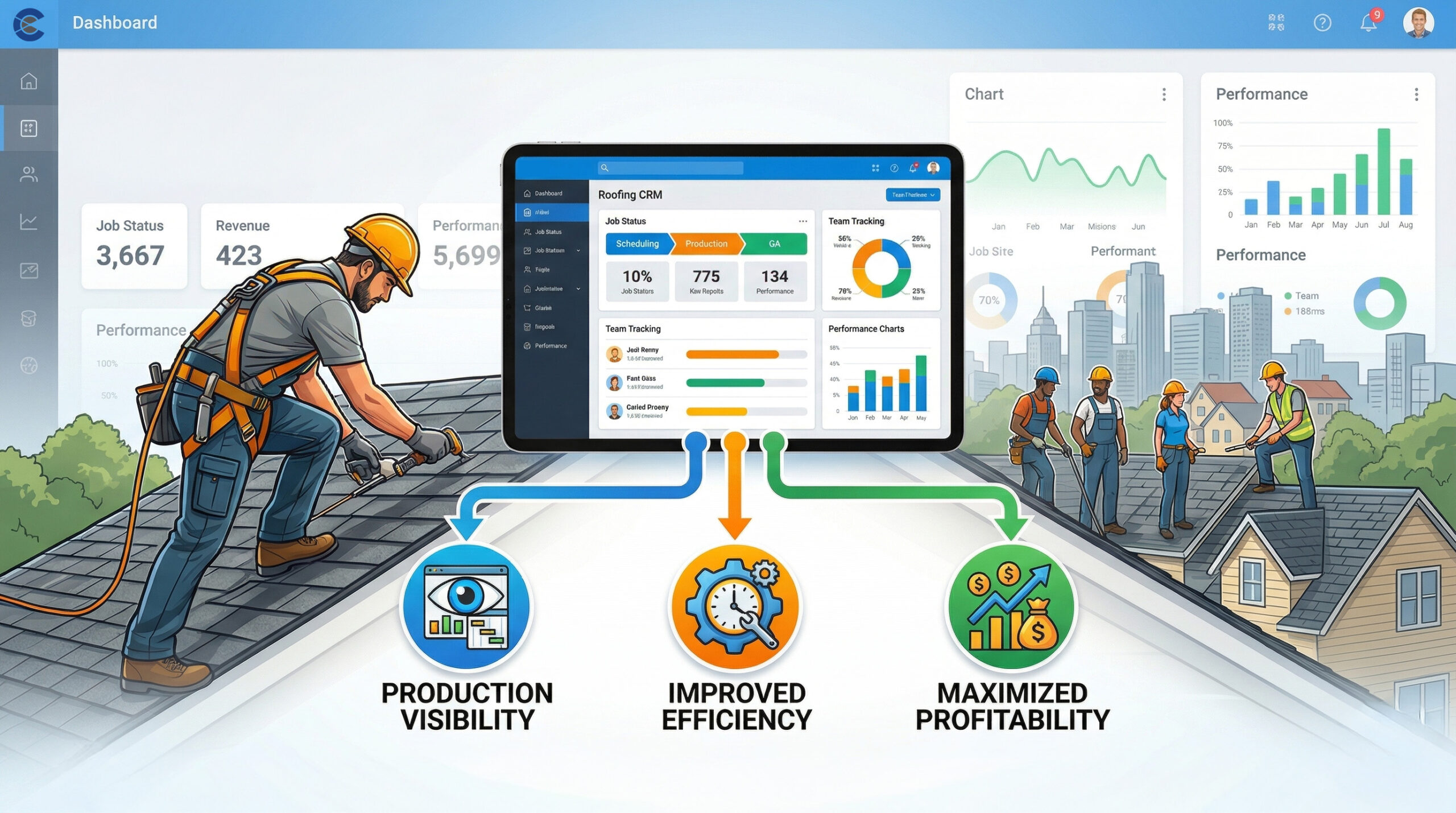
Ask what dashboards or reporting tools are available for tracking job status, delays, and progress. You should be able to quickly see what is on track, what needs attention, and where bottlenecks are forming without relying on manual updates.
7. How flexible is the system as we grow?
Your needs today may look very different in two or three years. Ask how the software scales with additional users, crews, or service volume. It is also worth asking what typically requires configuration versus custom development, so you understand future limitations early.
8. What replaces our existing tools?
Roofing software should simplify your tech stack, not add to it. Ask which tools the platform can realistically replace, such as CRM, estimating, service scheduling, or project tracking. This helps you understand true cost savings beyond the subscription price.
9. What does onboarding and support actually look like?
A smooth demo does not always equal a smooth rollout. Ask about onboarding timelines, training options, and ongoing support. Understanding how quickly teams can become productive is key to calculating return on investment.
10. How do companies like ours use this successfully?
Finally, ask for examples that match your business type and size. Whether you focus on commercial projects, service work, or a mix of both, real-world use cases help validate fit.
This is where platforms like Centerpoint Connect often stand out, especially for contractors looking for one system that connects CRM, estimating, service workflows, and project management without juggling multiple tools.
Making the Most of Your Roofing Software Demo
A demo should leave you with clarity, not more questions. By focusing on workflow, visibility, and long-term fit, you can evaluate roofing software based on real operational value, not just features.
If you are preparing for a demo or comparing platforms, contact the Centerpoint Connect team or book a demo to see how an all-in-one approach supports commercial roofing operations from first lead through final invoice.