Commercial roofing companies manage a constant flow of projects, service calls, and inspections – all while coordinating multiple crews, tracking materials, and communicating with demanding clients. For many contractors, this workload is still handled through spreadsheets, whiteboards, text messages, and paper files. But as job complexity increases, these tools hold teams back. They create communication gaps, slow down decision-making, and make it difficult to see what’s happening on each job in real time.
This is why more commercial roofing companies are adopting modern roofing software that centralizes job information, streamlines communication, and gives both office and field teams the visibility they need.
Why Spreadsheets Fall Apart in Commercial Roofing
Spreadsheets were never built to manage field-based, fast-changing work. Commercial projects require constant updates – and when those updates rely on someone manually revising a file, information becomes inaccurate almost immediately.
Spreadsheets cause issues like:
- Out-of-date schedules
- Miscommunication between office and field
- Lost notes or photos
- Inconsistent job documentation
- Delayed billing due to missing job details
None of these problems happen because teams are doing anything wrong – the tools simply can’t keep up with the pace of commercial roofing.
How Modern Roofing Software Replaces Manual Processes
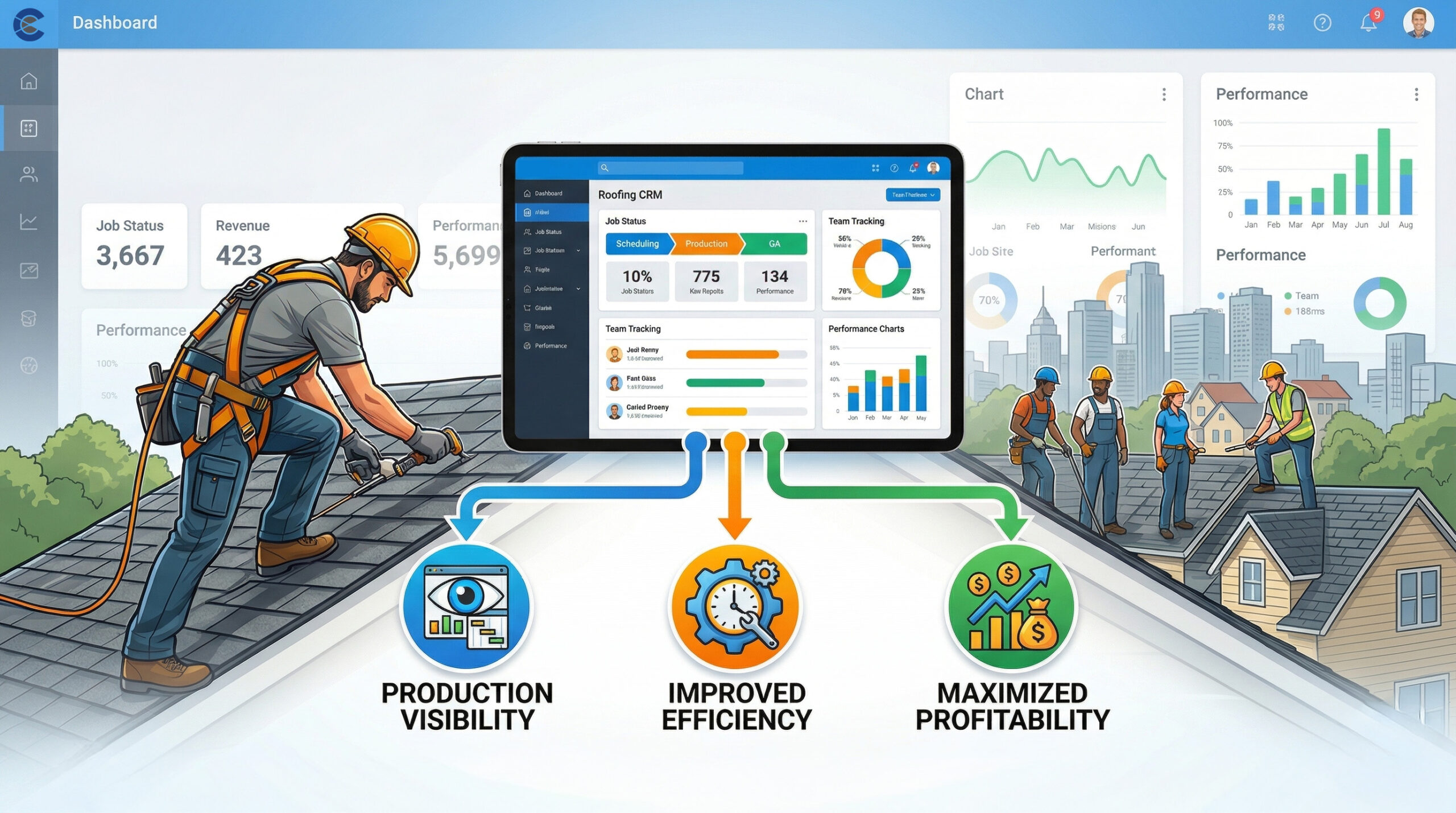
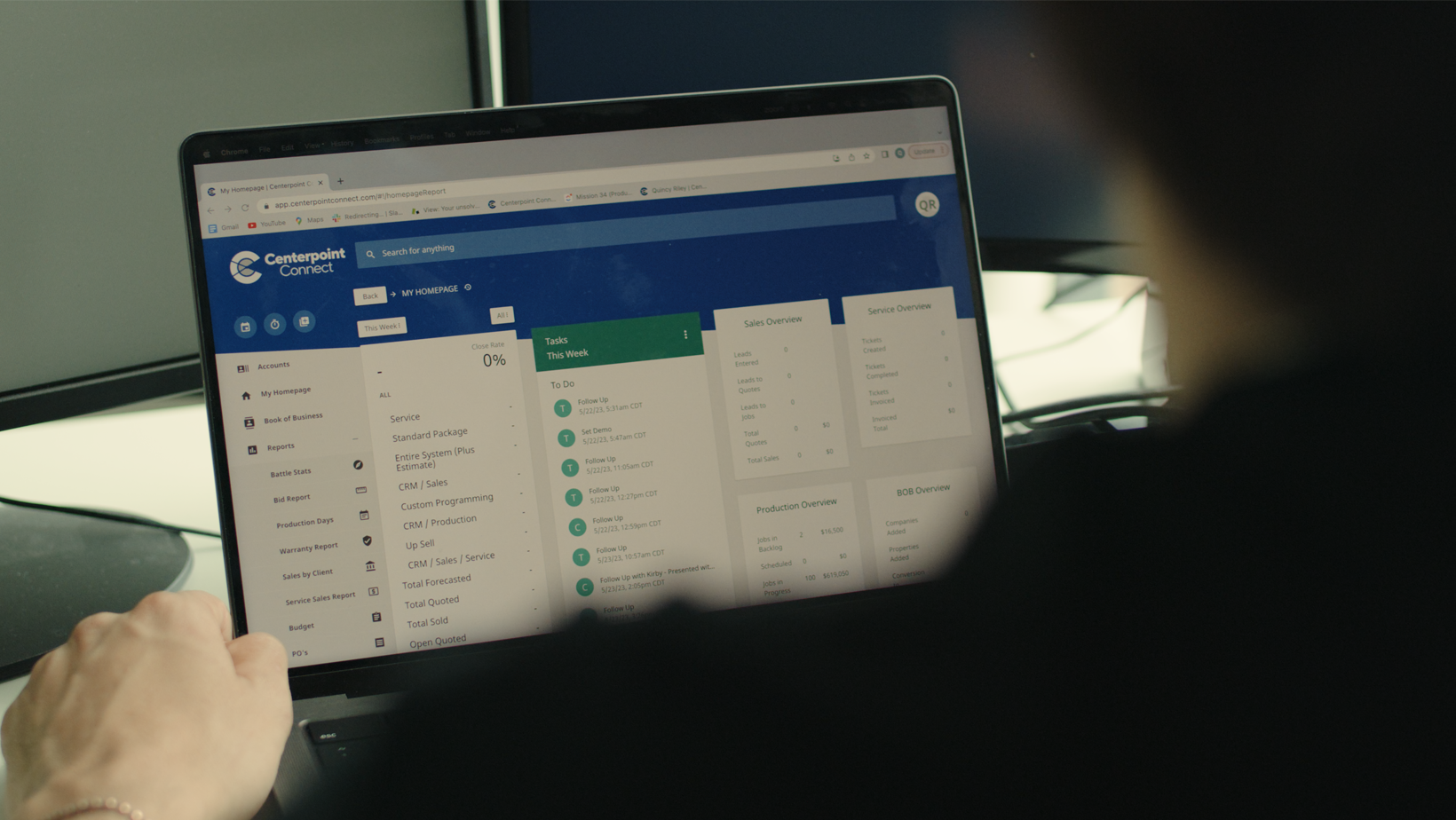
Digital job management systems solve these challenges by keeping all job information in one connected platform. Instead of scattered spreadsheets and text threads, companies rely on centralized communication, real-time updates, and digital documentation that everyone can access.
1. Real-Time Communication Between Office and Field
Modern roofing software gives teams a single source of truth. When a technician uploads photos or reports a condition change, PMs see it immediately. When a scope change occurs, the field crew receives the update without waiting for a phone call. This eliminates the “Who has the latest information?” problem that slows jobs down.
2. Smarter Scheduling With Fewer Surprises
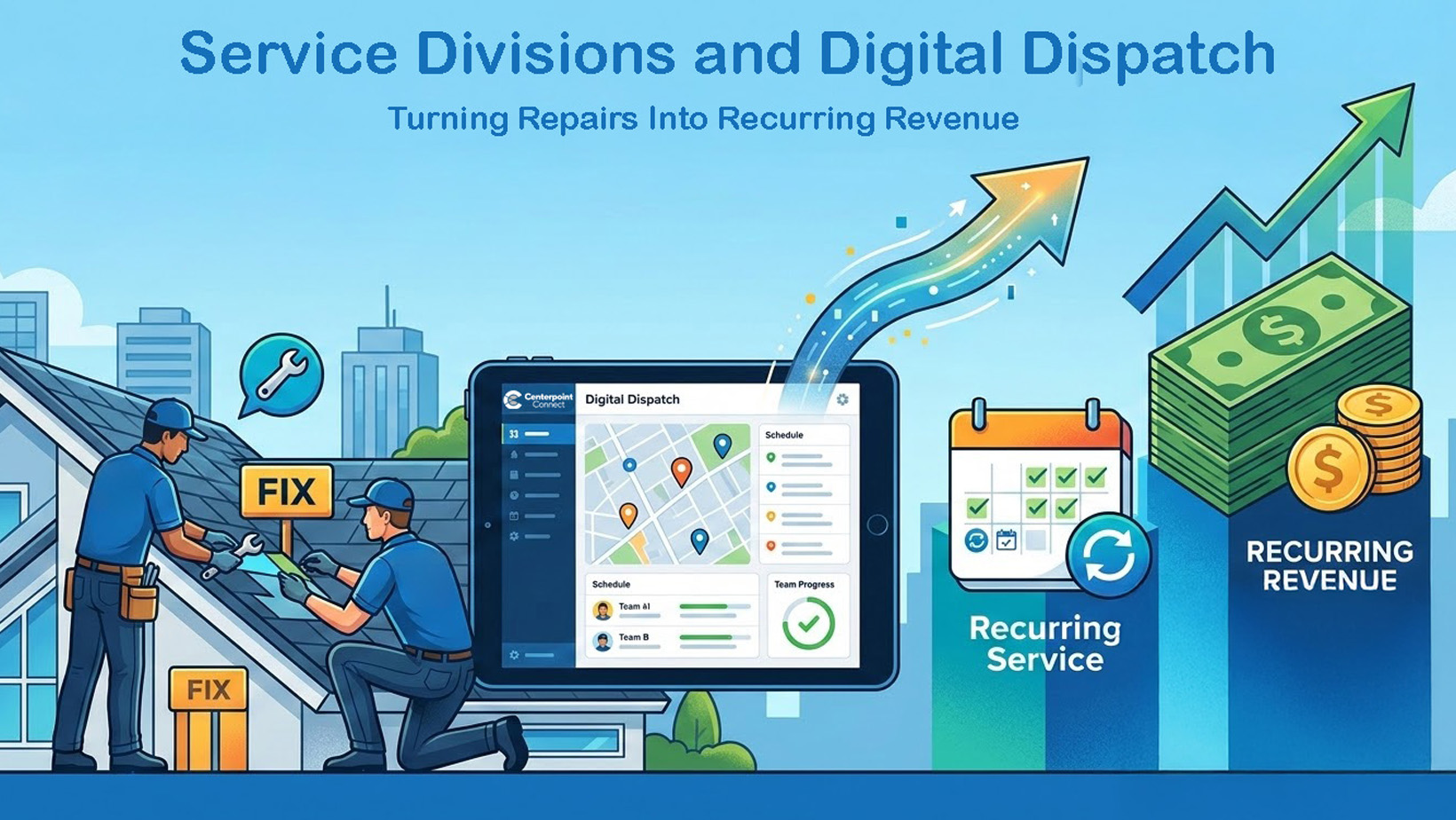
Commercial roofing schedules shift constantly – weather, materials, access, inspections, repairs, emergencies. Spreadsheets don’t adapt well. Modern systems do. Digital scheduling tools allow PMs and service coordinators to:
-
- Adjust schedules in real time
- Reassign crews quickly
- See workload and availability at a glance
- Prevent double-booking or gaps
For busy commercial teams, this flexibility directly improves productivity.
3. Clear Crew Coordination and Daily Direction
Commercial crews need accurate instructions before they arrive on-site, but without a structured system, important details often get lost. Photos sit on individual phones, notes get buried in text threads, and crews end up relying on memory instead of reliable information. Digital job management solves this by putting the complete job scope, documentation, safety notes, access instructions, and daily tasks in one place. Crews get everything they need upfront, and any updates appear instantly, keeping the entire team aligned throughout the day.
4. Better Material Tracking Across Every Job
Material usage is one of the biggest cost pressures in commercial roofing. Spreadsheets often lead to:
- Missing usage logs
- Inaccurate ordering
- Difficulty forecasting
- Confusing closeouts
Roofing software lets crews record material usage directly from the field, giving PMs accurate insight into what was used and what’s still needed. This reduces delays and helps keep projects on budget.
5. Real-Time Visibility Into Project Progress
One of the biggest advantages of moving from spreadsheets to digital systems is the ability to see what’s happening on a project in real time. Project managers can monitor current progress, understand delays as they occur, review photos and field notes, track labor activity, and follow how each phase of the job is advancing. With this level of visibility, they can make better decisions, address risks sooner, and keep projects moving without unnecessary interruptions.
Why More Commercial Roofing Companies Are Making the Shift
The move away from spreadsheets isn’t about adopting new technology – it’s about running a more organized, efficient, and scalable business. Companies that adopt roofing CRM and job management software see improvements in productivity, scheduling accuracy, field communication, documentation quality, customer satisfaction, and job profitability. Commercial roofing simply runs better when all departments operate from a single, connected system.
That’s why many teams turn to Centerpoint Connect – a platform built specifically for commercial roofing. It brings sales and estimating, service, production, and client communication into one easy-to-use system, with fast onboarding, mobile-ready tools, and reliable tracking that keeps every project moving efficiently.
Ready to See How Modern Job Management Works in Real Life?
Book a live demo of Centerpoint Connect and see how commercial roofing teams streamline communication, eliminate spreadsheets, and manage jobs with complete visibility.