For many roofing companies, a CRM is still seen as a sales tool. It stores contacts, tracks leads, and helps follow up on proposals. Once a job is sold, the CRM often gets left behind while production moves into spreadsheets, emails, or separate project tools. That disconnect creates blind spots.
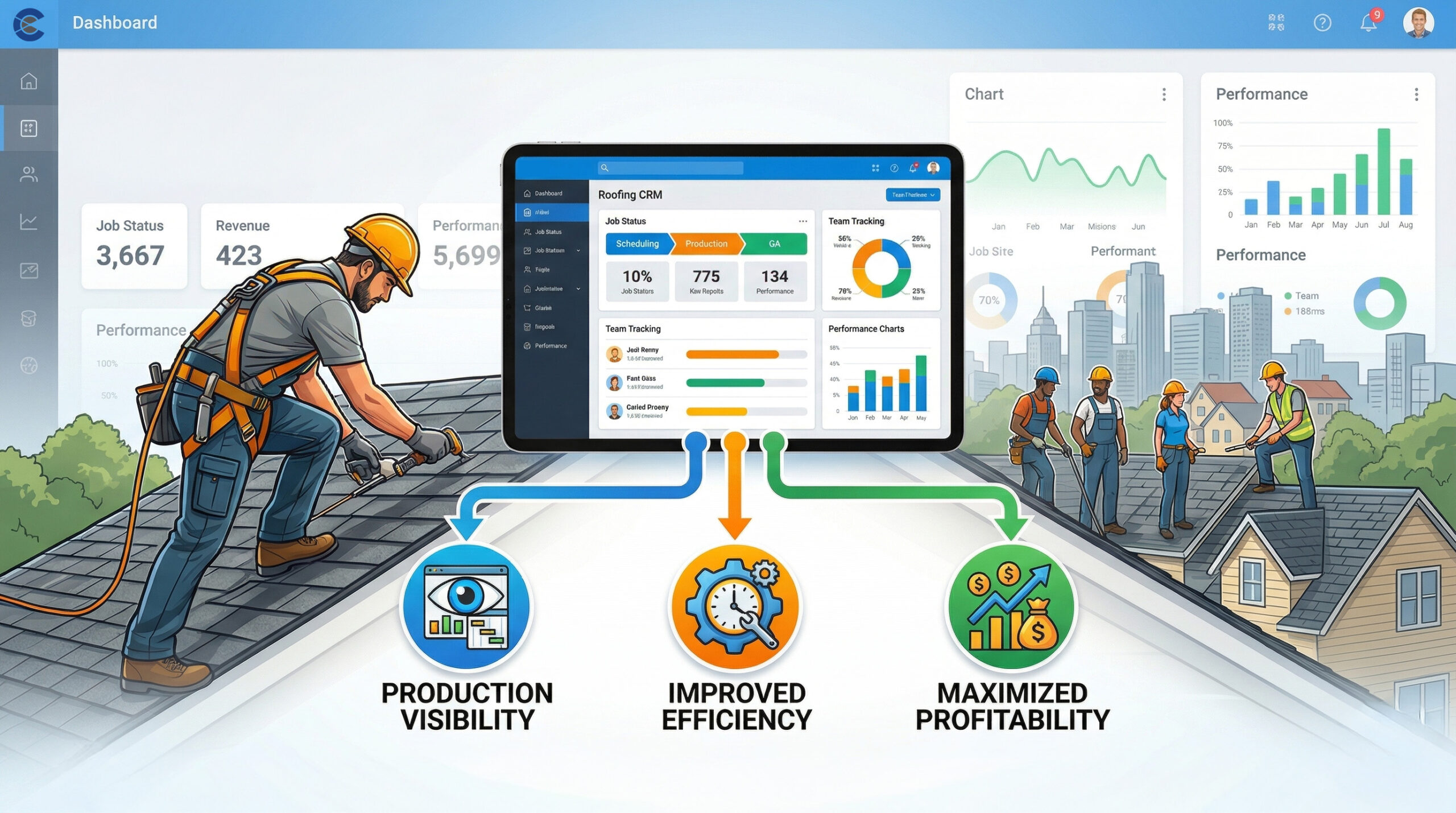
Modern roofing CRMs are no longer just about lead management. When connected properly, they become the system that links sales, production, and financial data, giving teams real visibility into how work is actually moving through the business.
Why Visibility Matters After the Sale
Selling the job is only the first step. Profit is made or lost during production. When sales and production live in separate systems, common issues appear:
- Jobs stall without anyone noticing
- Information gets lost between handoffs
- Production teams lack context from the sales process
- Costs creep up before problems are identified
A connected roofing CRM keeps the full job lifecycle visible, from the first conversation to final invoicing.
Connecting Sales Data to Production Reality
When sales and production share the same system, teams work from the same information. With a CRM built for roofing operations, companies can:
- See the approved scope of work
- Access photos, notes, and scope details from the field
- Track job status without chasing updates
- Reduce errors caused by incomplete handoffs
This connection helps production teams start jobs faster and with fewer surprises, which directly impacts timelines and margins.
Reducing Bottlenecks Through Transparency
One of the biggest benefits of a connected CRM is early visibility into problems. When production data is tied to the CRM, teams can quickly identify:
- Jobs waiting on materials or approvals
- Crews falling behind schedule
- Budget overruns before they escalate
- Repeated delays in specific phases of work
Instead of reacting after deadlines are missed, managers can address issues while there is still time to adjust. That transparency keeps projects moving and reduces costly slowdowns.
Improving Accountability Across Teams
Disconnected systems make accountability difficult. When information is scattered, it is hard to know where breakdowns occur. A centralized CRM creates clear ownership by showing:
- Who is responsible for each stage of a job
- When tasks were assigned and completed
- Where delays or gaps originate
This clarity improves communication between sales, production, and management, while also setting more realistic expectations for clients.
From Visibility to Profitability
Better visibility leads to better decisions. When roofing companies can see real-time production data alongside sales and financial information, they gain:
- More accurate job costing
- Better forecasting of labor and materials
- Fewer change orders and surprises
- Stronger profit margins over time
Instead of guessing where profits are leaking, teams can pinpoint issues and improve processes with confidence.
CRM as the Backbone of Roofing Operations
The most effective roofing CRMs act as the backbone of the business, not just a sales database. They connect people, projects, and performance in one place.
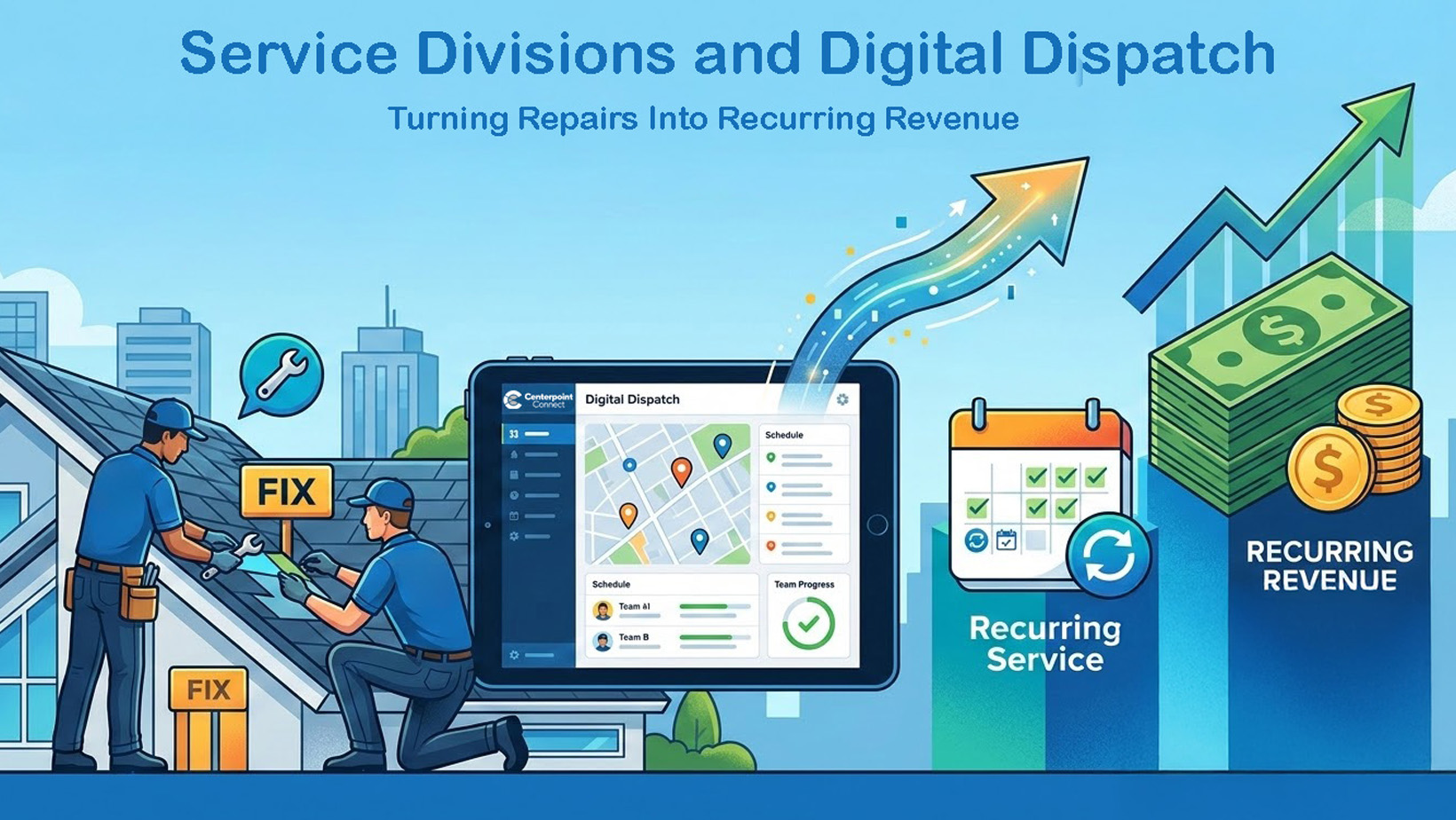
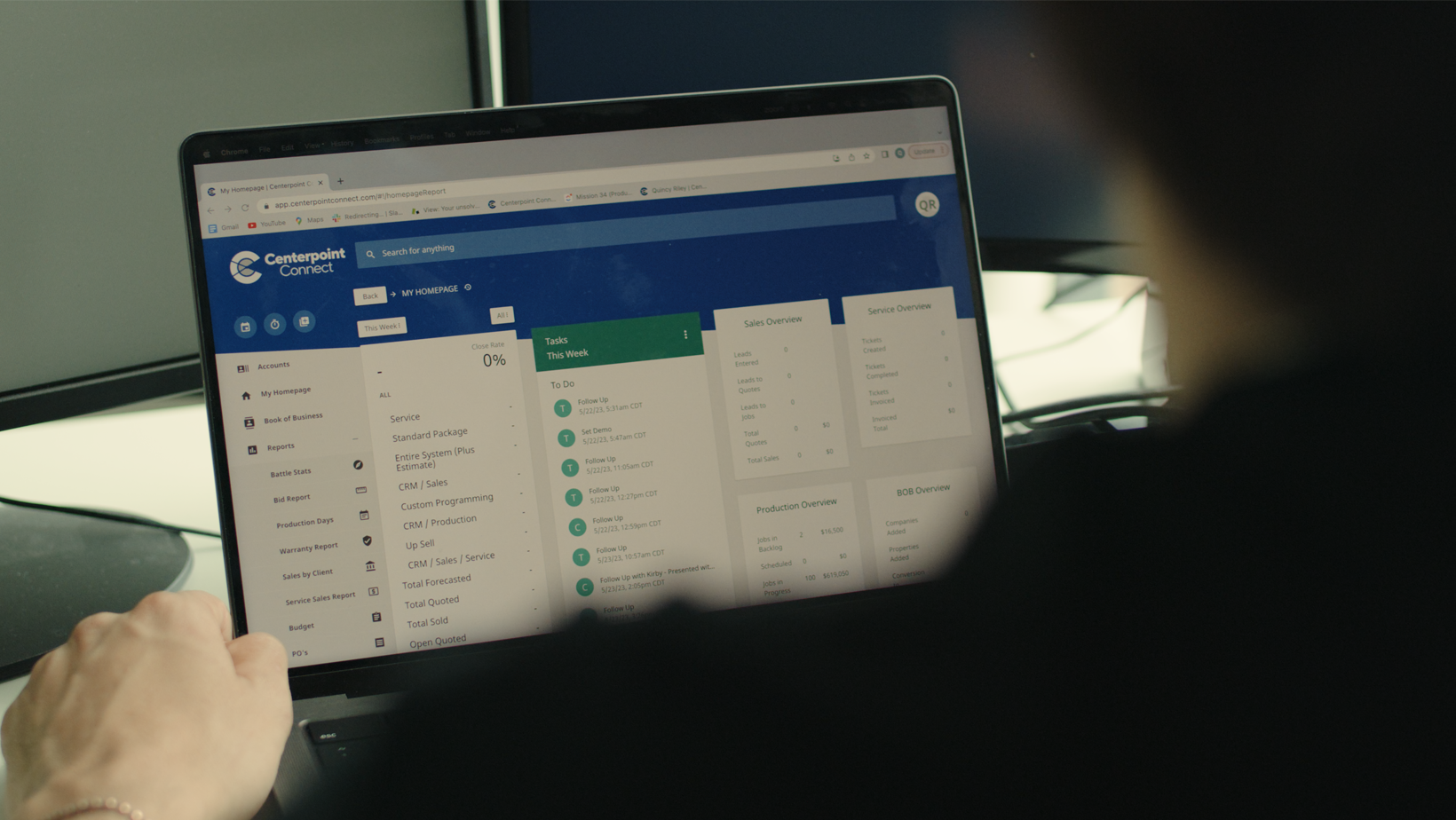
This is where Centerpoint Connect fits naturally into roofing operations. By linking CRM, production tracking, service workflows, and project management in one system, teams gain clear visibility across the entire job lifecycle. Sales, production, and management all work from the same information, reducing bottlenecks and improving overall profitability.
Ready for Better Visibility Across Your Projects?
If your CRM stops being useful once a job is sold, it may be time to rethink how your systems work together. Contact the Centerpoint Connect team or book a demo to see how a connected roofing CRM can improve production visibility, reduce inefficiencies, and support healthier profit margins.