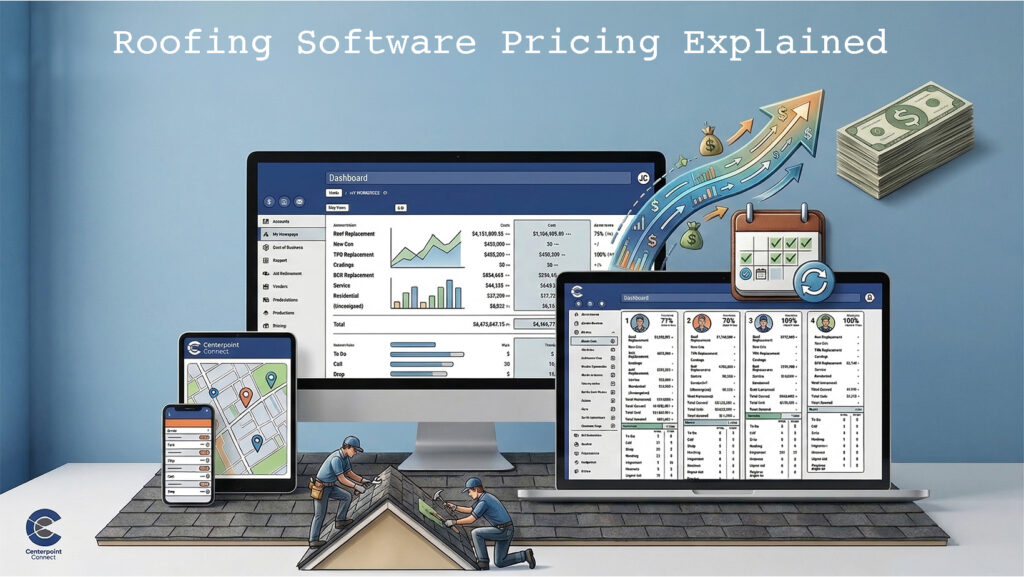
Roofing software pricing can feel confusing at first. One platform charges by user, another by feature, and others add costs for integrations, support, or onboarding. On paper, it can be hard to tell what you are actually paying for, and what kind of value you should expect in return.
The key is to look beyond the monthly fee. The real question is not just how much roofing software costs, but what it helps your business save, improve, and scale over time.
How Roofing Software Is Typically Priced
Most roofing software platforms use a combination of pricing factors. Understanding these upfront helps avoid surprises later. Common pricing drivers include:
- User seats: Many platforms charge per user. This usually includes office staff, project managers, service coordinators, and sometimes field users. Costs can add up quickly as teams grow.
- Modules or feature access: Some systems charge separately for CRM, estimating, service management, or project tracking. What looks affordable at first can increase once essential features are added.
- Integrations: Connecting accounting software, document storage, or third-party tools may come with additional fees or ongoing costs.
- Setup and onboarding: Implementation, data migration, and training are sometimes billed separately, especially for more complex systems.
Understanding which features are included and which are add-ons is critical when comparing roofing software pricing.
The Hidden Cost of Using Multiple Tools
Many roofing companies rely on a mix of software to get the job done. One tool for CRM, another for estimating, another for service scheduling, and spreadsheets to fill in the gaps. While each tool may seem affordable on its own, the hidden costs add up quickly:
- Duplicate data entry
- Manual handoffs between systems
- Missed information and errors
- Time spent switching between platforms
- Extra training and support for each tool
These inefficiencies rarely show up on an invoice, but they directly impact productivity, accuracy, and profitability.
Evaluating Value Beyond the Monthly Price
When evaluating roofing software pricing, it helps to think in terms of return on investment, not just cost. Well-designed roofing software can deliver value through:
- Time savings from automated workflows
- Fewer errors in estimating and documentation
- Faster job handoffs between teams
- Better visibility into project status and costs
- More accurate invoicing and reporting
Over time, these gains often outweigh the software fee, especially for companies managing multiple crews, service work, or complex commercial projects.
Why All-in-One Platforms Often Cost Less Long Term
All-in-one roofing software typically appears more expensive upfront, but it often reduces overall costs in the long run. By replacing multiple tools with one connected system, companies can:
- Reduce software overlap
- Simplify training and onboarding
- Eliminate data silos
- Improve consistency across teams
Instead of paying separately for CRM, estimating, service management, and project tracking, everything works together in one platform. This is where solutions like Centerpoint Connect stand out. By combining CRM, estimating, service workflows, and project management in one system, companies gain clearer visibility and reduce the operational friction that often drives up costs.
Choosing Software That Matches Your Business Goals
The right roofing software pricing model depends on how your business operates today and where you want it to go. When comparing options, it helps to ask:
- Which features do we actually need day to day?
- How many users truly need access?
- Will this replace existing tools or add another layer?
- How will this improve accuracy, speed, or accountability?
Focusing on long-term value rather than short-term price makes it easier to choose software that supports growth instead of limiting it.
Making a Smarter Investment in Roofing Software
Roofing software pricing should be evaluated as an investment, not just an expense. The right platform can reduce inefficiencies, improve accuracy, and give teams better control over projects and margins.
If you are weighing your options and want a clearer picture of cost versus value, contact the Centerpoint Connect team or book a demo to see how an all-in-one approach can simplify operations and deliver measurable ROI over time.