You finished the inspection, climbed the roof, documented the damage, took the photos, and shook hands with the building owner on the way out. And yet nothing has been sold yet.
For most commercial roofing contractors, the stretch between a completed inspection and a signed contract is exactly where deals quietly die. Not because the work wasn’t good or the price was wrong, but because the handoff broke down somewhere between the job site and the client’s inbox, and by the time the proposal arrived, the building owner had already moved on.
This is the black hole in roofing sales, and most contractors don’t even know they’re losing deals to it.
What the Gap Actually Looks Like
The inspection-to-proposal breakdown doesn’t happen all at once. It happens in layers.
Layer one: lost notes. Your inspector finishes the site visit with a head full of detail covering membrane condition, flashing issues, drainage problems, and square footage estimates. Some of it makes it into photos, some gets written on a clipboard, and some lives exclusively in memory until it gets transcribed hours or days later, by which point it’s incomplete and context is gone. A good roof inspection program captures everything on-site, attached to the job record, the moment it’s observed.
Layer two: slow turnaround. Speed matters more in roofing sales than most contractors realize. The building manager who just walked your inspector around the roof is engaged right now, having seen the problem, understood the urgency, and opened up to a solution. But every day between the inspection and the proposal is a day that engagement cools, and every week is a week the competition has to show up with their own bid. Studies consistently show that response time is one of the strongest predictors of B2B sales conversion, and in commercial roofing, slow proposals are losing proposals.
Layer three: zero follow-up. The proposal goes out, nothing comes back, and most contractors do nothing. Not because they’re not interested in the deal, but because there’s no system tracking it. The lead falls off the radar, weeks pass, the building owner chooses someone else, and the contractor never knew they were close.
Each layer on its own is a manageable problem, but all three together create a pipeline that leaks at every stage.
Where the Handoff Breaks Down
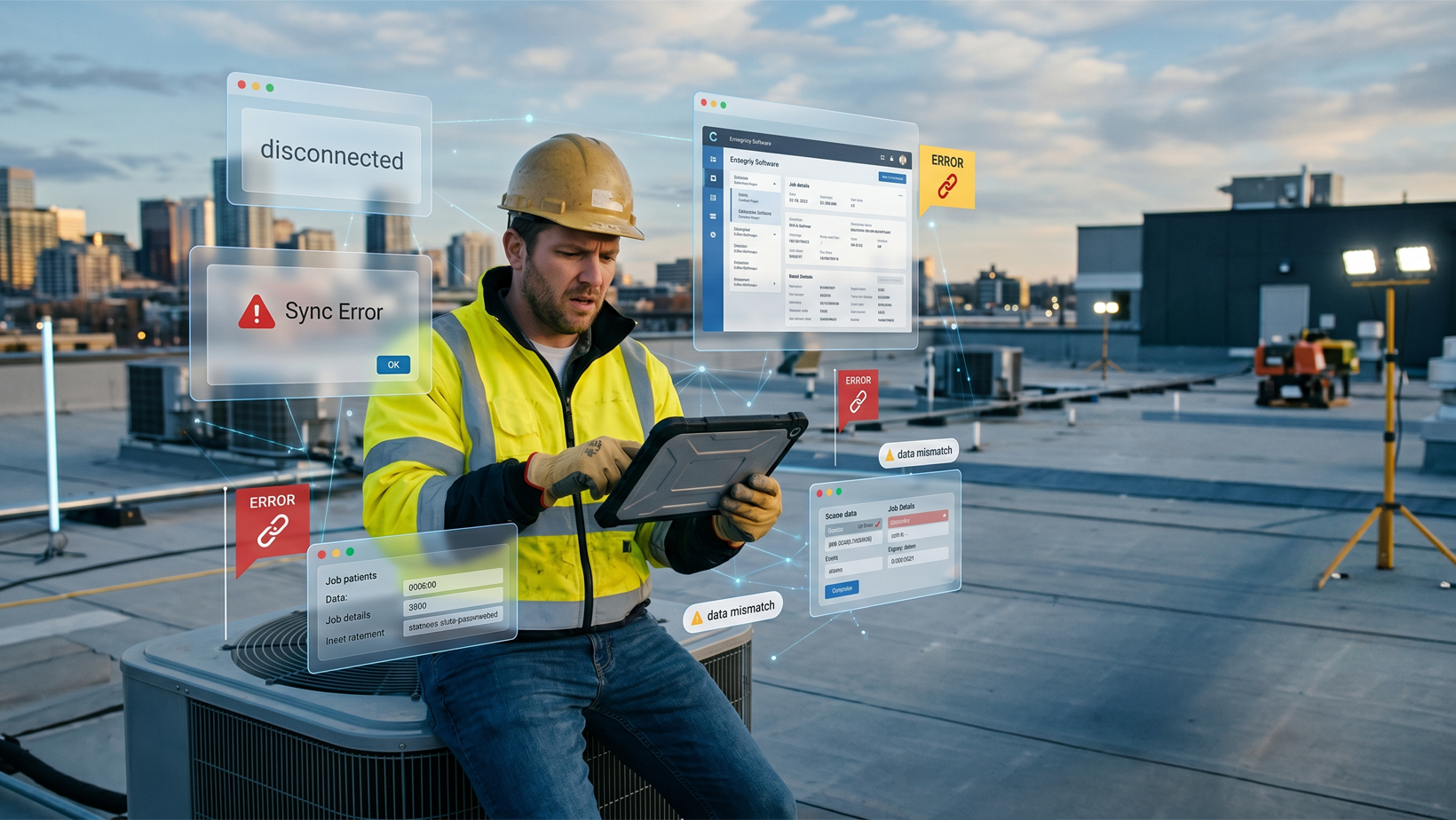
The root cause is almost always the same: the inspection and the sales process live in separate worlds. The inspector finishes the job and either calls it in, emails photos, or hands off a clipboard. Then an estimator picks it up, if they get to it, and rebuilds the picture from incomplete information before writing a proposal and sending it out. Follow-up, if it happens at all, is manual and inconsistent.
There’s no single system connecting site observation to estimate client communication, which means every transition point is an opportunity for something to fall through. CRM software for roofing contractors is supposed to solve this, but generic CRMs weren’t built around the roofing workflow. They can track contacts and log calls, but they can’t connect an inspection form to an estimate or automatically flag a proposal that’s been sitting without a response for five days. Most roofing contractors who’ve tried a generic CRM have ended up with an expensive contact database they barely use.
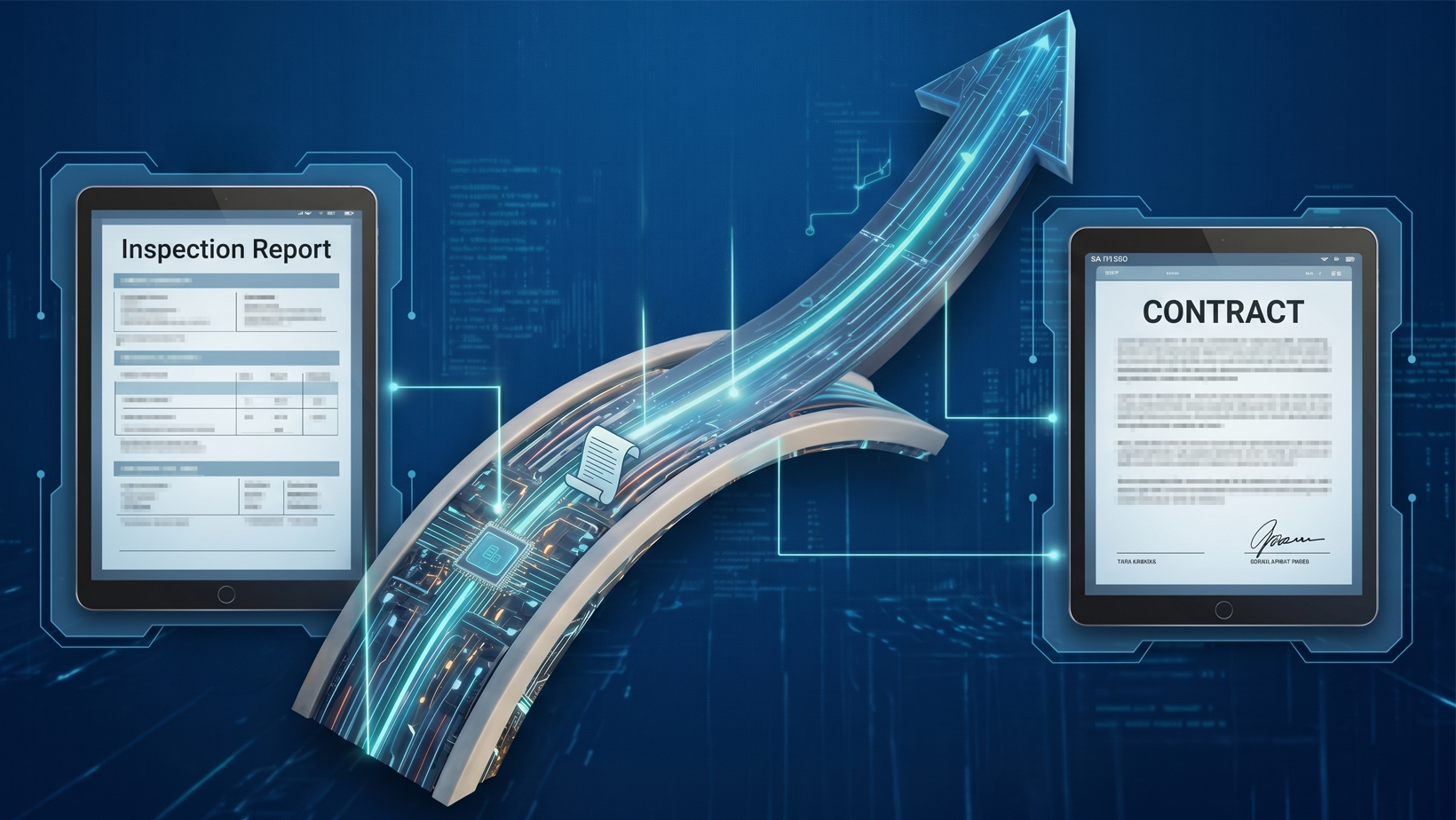
What the inspection-to-contract gap actually requires is a roofing contractor CRM built around the specific sequence of how commercial roofing sales work: capturing the lead, qualifying the job on-site, building and delivering the estimate, tracking the proposal, and converting the signed deal directly into an active production project without re-entering a single piece of data along the way.
What a Connected Workflow Looks Like When It’s Working
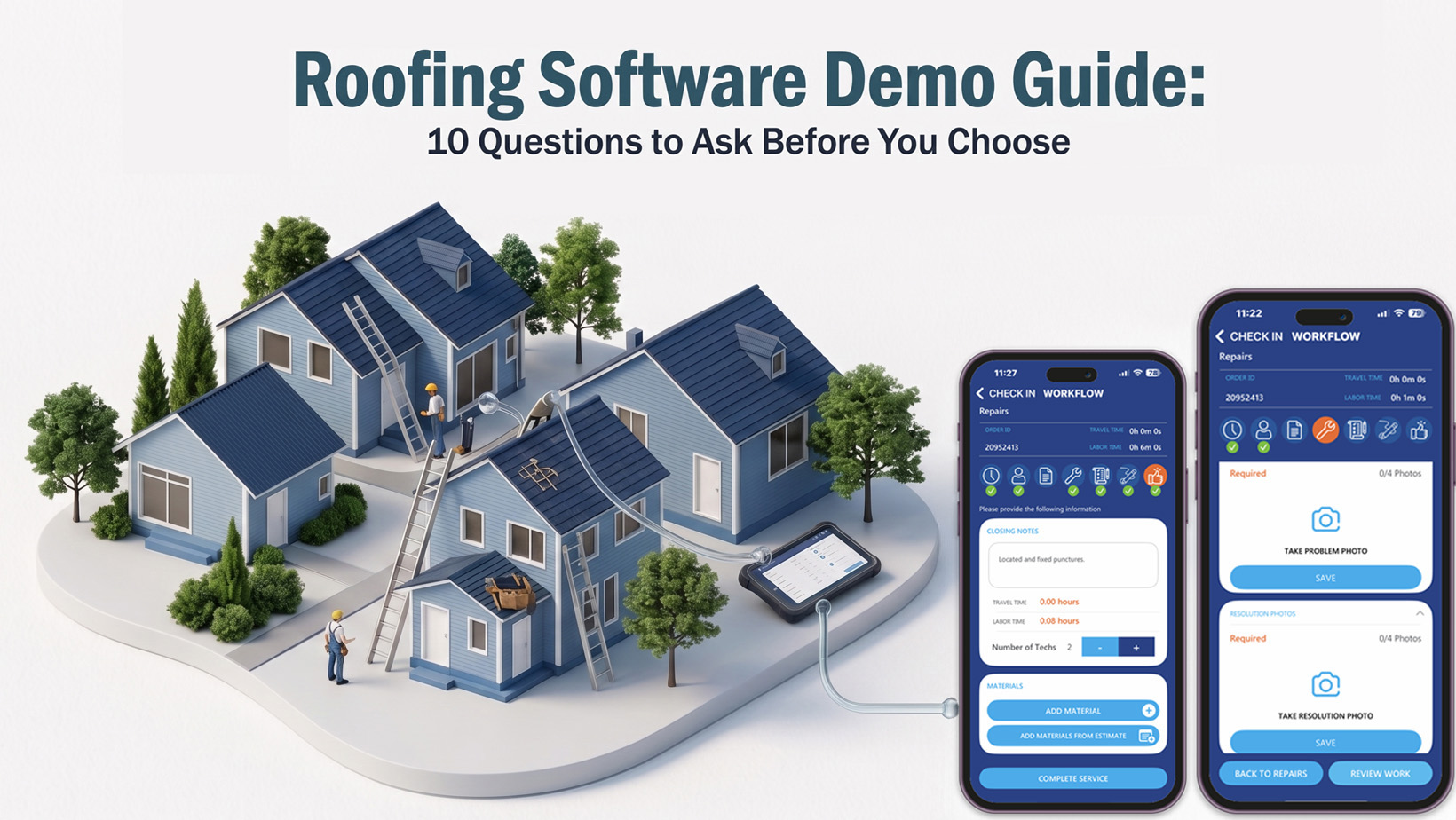
When your roof inspection program is tied directly to your estimating and CRM tools, the whole sequence changes. The inspector arrives on site with the job already open in the system, with contact info, site details, and any prior service history all in one place. They document conditions, annotate photos, and log measurements directly to the job record in real time using a mobile app. So nothing gets transcribed later, and nothing gets lost.
Back at the office, or sometimes before the inspector even leaves the site, that inspection data flows into the estimating module. The estimator works from a complete, structured record with annotated photos, site notes, and a preloaded price book, instead of rebuilding everything from a call or loose photos. Proposal turnaround drops from days to hours, and the finished proposal goes out as a branded PDF with photos, scope items, exclusions, and payment terms already built in.
From there, the system tracks what happens next. Did the client open it? Has it been sitting unread? Is there a follow-up assigned, with a clear owner and a due date? Nothing gets left to memory or habit, and deals don’t quietly stall. When the client signs, the approved proposal moves straight into production as a live job. Scope, pricing, photos, and notes carry over automatically, with no re-entry and no disconnect between sales and operations. This is what roofing CRM looks like when it’s built for the way the work actually happens, connecting everything from inspection to production instead of leaving gaps between each step.
The Deals You Don’t Know You’re Losing
The hardest part about the inspection-to-contract gap is that it’s invisible in your numbers.
You know your close rate, but you probably don’t know how many proposals went out late, how many were never followed up on, or how many deals went cold in the 72 hours after an inspection while your estimate was still being assembled. That data doesn’t exist if it isn’t being captured, which most roofing contractors aren’t doing.
The contractors who’ve closed that gap consistently report the same things: faster proposal turnaround, higher close rates on inspected leads, and a sales process that doesn’t depend on any one person’s memory or habits. Not because they got better at sales, but because they stopped losing ground between the inspection and the signed contract.
How Centerpoint Connect Closes the Gap
Centerpoint Connect is built as an all-in-one platform for commercial roofing, so the inspection to estimate to contract flow isn’t spread across different tools, it all happens in one place.
Leads are captured and tracked in the CRM, inspections are completed in the field with photos and notes attached in real time, and that data flows straight into estimating, where proposals are built, sent, and tracked without duplication or handoffs.
When a proposal is approved, it turns into a live job in one step, with scope, pricing, and documentation carried into production, so nothing gets lost and nothing has to be rebuilt. That’s the difference between a connected system and a stack of tools. One keeps the process moving, the other slows it down.
Book a demo to see the full inspection-to-contract workflow in action.