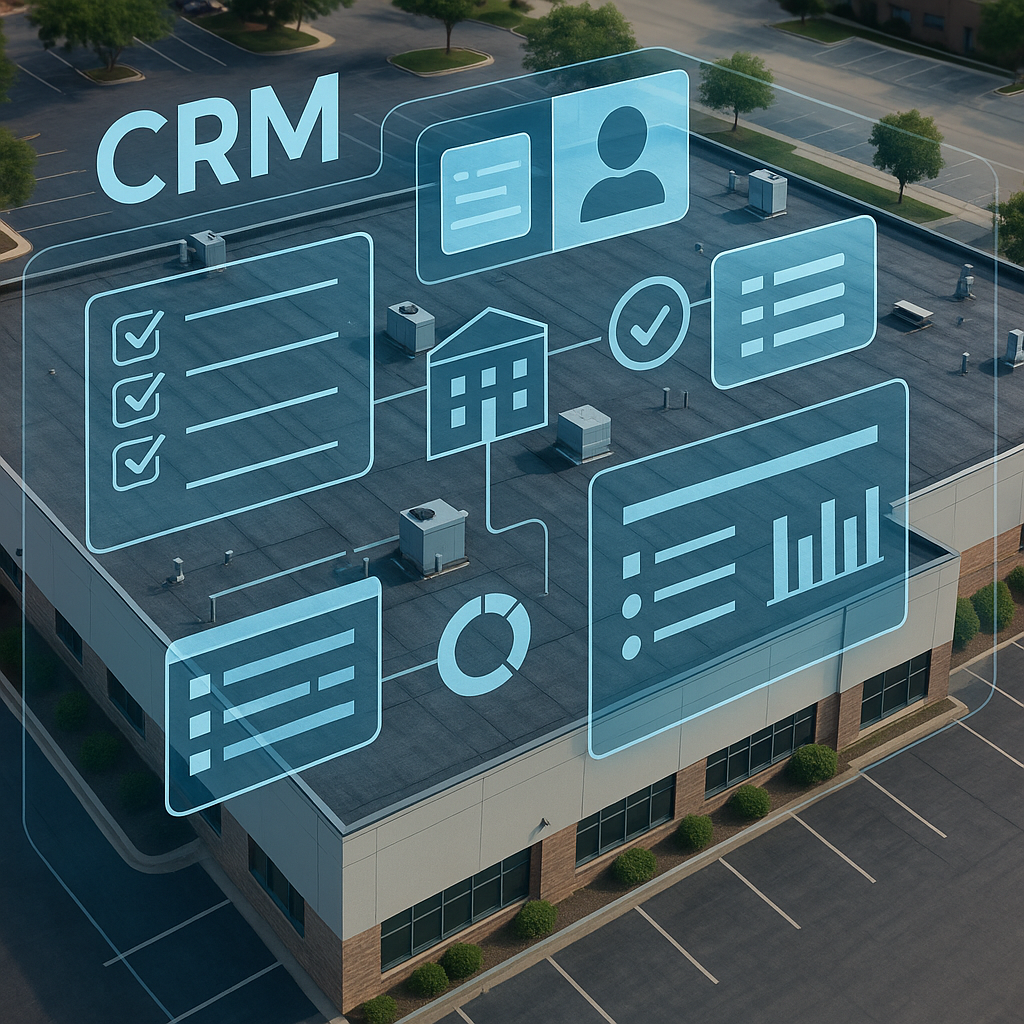
In the commercial roofing industry, where managing client relationships often means juggling multiple projects at the same properties over time, efficiency is critical. A customer relationship management (CRM) system can streamline operations, improve client satisfaction, and help businesses scale—but only if the CRM is well-suited to the unique needs of contractors. Here’s how to choose the right tool for your business and ensure it delivers lasting value.
Why a CRM Is Essential for Roofing Contractors
A good CRM provides the backbone for organizing and growing your operations. It enables your team to track sales opportunities, follow up with prospects, and manage customer interactions efficiently.
Key benefits include:
- Improved Sales Processes: Track leads, quotes, and job progress from a central platform.
- Enhanced Customer Satisfaction: Respond promptly to client needs with easy access to service history and project details.
- Operational Transparency: Streamline communication between sales, production, and service teams.
In the roofing business, a CRM must go beyond the basics. It must accommodate recurring jobs at a single property, such as maintenance and re-roofing, while ensuring smooth transitions between departments. A generic system often struggles to handle these complexities.
Why Generic CRMs May Not Fit the Bill
Mainstream platforms like HubSpot and Salesforce have earned their reputations as powerful tools for broad industries. However, their versatility comes with limitations for businesses like commercial roofing contractors:
- Data Model: HubSpot and Salesforce support standard CRM records and customizable data models. Ask each vendor to demonstrate how the proposed setup links properties, repeat jobs, service history and customer contacts.
- Configuration and Cost: Compare the features, configuration effort, training needs and total cost for your own workflows.
- Workflow Support: Test the handoff from sales to production and service, including any integrations your proposed setup requires.
The right choice depends on the configuration, integrations, support and budget your team needs.
CRM Options for Roofing Contractors
Fortunately, there are CRM solutions that cater to contractors’ specific workflows, focusing on the unique aspects of roofing operations:
Centerpoint Connect: Designed with commercial contractors in mind, this system allows seamless tracking of multiple jobs and services at a single property. With features like customer communication tools and job progress tracking, it simplifies operations for those managing recurring projects or long-term client relationships. See how Centerpoint handles roofing service requests and dispatch.
JobNimbus: A roofing and contractor CRM with project boards, estimates, documents, invoices and plans for different team sizes.
AccuLynx: Roofing software with estimating, material ordering and project management. The vendor describes its primary focus as residential insurance restoration and retail roofing.
Zoho CRM: A general-purpose CRM with free and paid editions and customization options. Confirm the features and configuration needed for your roofing workflow.
Each of these CRMs brings unique advantages, so your decision should be guided by your business’s specific challenges and growth goals.
How to Choose the Right CRM
- Understand Your Business Model
Before exploring your options, map out your processes. How do your sales team handle leads? How do projects transfer between sales and production? Choose a CRM that aligns with these workflows to avoid unnecessary disruptions. - Start Simple
Select a system that delivers on your core needs—tracking opportunities, managing customer data, and automating follow-ups. Avoid getting bogged down by advanced features unless they address an immediate pain point. A phased approach to adoption ensures your team can adapt easily. - Involve Your Team
Successful implementation hinges on user buy-in. Choose a system that employees find intuitive and time-saving. Involve them during the decision-making process, and emphasize how the CRM can make their daily tasks more efficient. - Consider Integration and Scalability
Look for a CRM that integrates with tools you already use, such as accounting software or project management systems. This ensures smoother operations as your business grows. Systems like Centerpoint Connect offer APIs or native integrations, allowing your data to flow seamlessly between platforms.
Building a Smarter Business with the Right CRM
The right CRM is more than software—it’s a strategy for long-term success. By providing clarity across your sales pipeline, improving communication between departments, and enhancing customer experiences, the right system can revolutionize how your roofing business operates.
Compare general-purpose and roofing-specific systems against the same property, job, service and reporting requirements. Request a demonstration with representative records before deciding. To evaluate Centerpoint Connect, book a live demo.
Whether you’re considering industry-specific options like Centerpoint Connect or exploring general CRMs, the key is choosing one that simplifies operations, fosters team buy-in, and scales alongside your business. With careful planning and implementation, a CRM can help your business not just stay organized but thrive in today’s competitive market.