
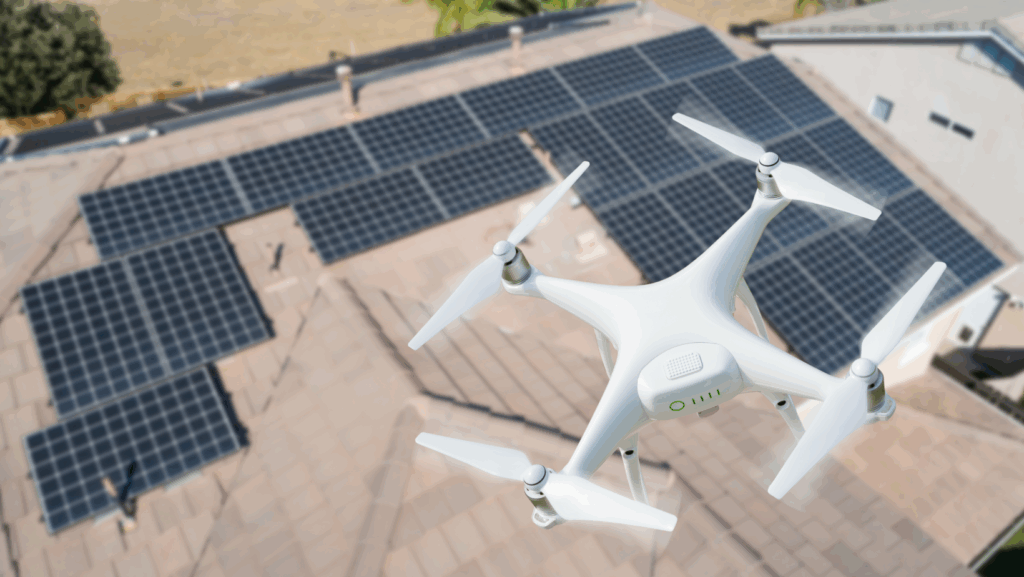
Drones give roofing contractors another way to document a roof and explain visible conditions to a client. A planned aerial capture can produce useful images for inspection discussions, measurement work and project records. Match the capture plan to the information the project needs.
Documenting Visible Roof Conditions
 Capture consistent views of visible roof conditions to support an inspection discussion or a before-and-after project record. Those images can help the client and office team understand the same areas of concern. Combine aerial documentation with physical access or additional testing where the inspection requires it. For U.S. work, plan flights around the applicable FAA commercial drone requirements.
Validating Measurements for Estimating
Drone-derived models can support measurement work when the output meets the project’s accuracy needs. Relative accuracy within a model differs from absolute accuracy against real-world coordinates. Validate measurements against known dimensions or suitable checkpoints, and account for capture and processing conditions. DroneDeploy’s accuracy guidance explains these distinctions.
Comparing Workflow Time and Cost
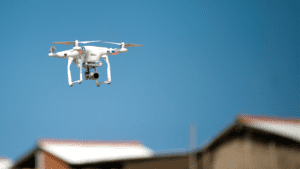 Plan a trial from flight preparation through image processing, review and any remaining site checks. Compare the useful information delivered, total staff time and cost with the current method. This gives the business a practical basis for deciding which projects suit aerial capture and where it adds value.
Using Aerial Images in Client Communication
Use aerial project photos in client presentations and marketing to explain the work. Clear before-and-after views and labels for the roof areas shown give the audience context. Where a model is available, review it alongside the project information when discussing findings, completed work and next steps.
 Start with a project that has a clear documentation or measurement need. Use the trial to establish repeatable capture, review and delivery steps. Share the resulting images with the people estimating, planning or explaining the work, and use their feedback to improve the next capture.